AIA-approved Major Hazard Installation specialists

Protect your facility. Meet MHI requirements. Make informed risk decisions.

MMRisk supports high-hazard facilities with MHI risk assessments, HAZOP facilitation, quantitative risk analysis, consequence modelling and emergency planning.

MHI Risk Assessment team at work
Department of Employment and Labour Approved Inspection Authority
CI MHI 0013
SANAS SANAS accredited
MH10037
AIA approved Authorised for Major Hazard Installation risk assessments · CI MHI 0013
SANAS accredited Inspection body accreditation · MH10037
Level 1 B-BBEE South African process-safety consultancy
Local and international exposure Project experience across Africa, Europe, the Middle East and Canada

Trusted across high-hazard and regulated industries.

Selected organisations MMRisk has supported in complex industrial and regulatory environments.

Airports Company South Africa logo
Air Liquide logo
Air Products logo
Amatola Water logo
bp Southern Africa logo
Easigas logo
Engen logo
Famous Brands logo
Natref
Oryx Energies logo
Sasol logo
Transnet Pipelines logo
Established
2016
AIA registration
CI MHI 0013
SANAS accreditation
MH10037

What does your facility need help with?

Select the situation closest to your current project or compliance requirement. You can change your selection at any time.

Specialist risk-management services for complex facilities.

MMRisk combines regulatory knowledge, engineering analysis and practical operating experience. Move through the capabilities to compare the right level of support.

0106

Process-safety specialists reviewing facility information
01

MHI risk assessment

Establish the facility’s risk basis and produce defensible evidence for regulatory and operating decisions.

From early screening through classification, consequence analysis and reporting by an Approved Inspection Authority.

  • New or existing high-hazard facilities
  • Inventory, process or boundary changes

Explore MHI risk assessment
02

HAZOP and HAZID facilitation

Bring the right disciplines together to identify deviations, credible consequences and practical safeguards.

Independent workshop facilitation with clear preparation, structured guide-word review and usable action records.

  • Design reviews and modifications
  • Existing plant and operating procedure reviews
Explore HAZOP services
Engineering team participating in a facilitated HAZOP workshop
Industrial facility used as the basis for quantitative risk analysis
03

Quantitative risk assessment

Quantify scenario frequencies and risk so teams can compare options and demonstrate proportionate controls.

Transparent assumptions, documented methods and outputs that can be reviewed and challenged.

  • MHI submissions and risk summation
  • Land-use and investment decisions
Explore QRA services
04

Consequence modelling

Understand how fire, explosion or toxic-release scenarios could affect people, assets and neighbouring land.

Scenario definition and modelling tied to the decision—not a software screenshot without engineering context.

  • Emergency-planning zones
  • Layout, separation and escalation reviews
Explore consequence modelling
Risk contour visualisation over an industrial facility plan
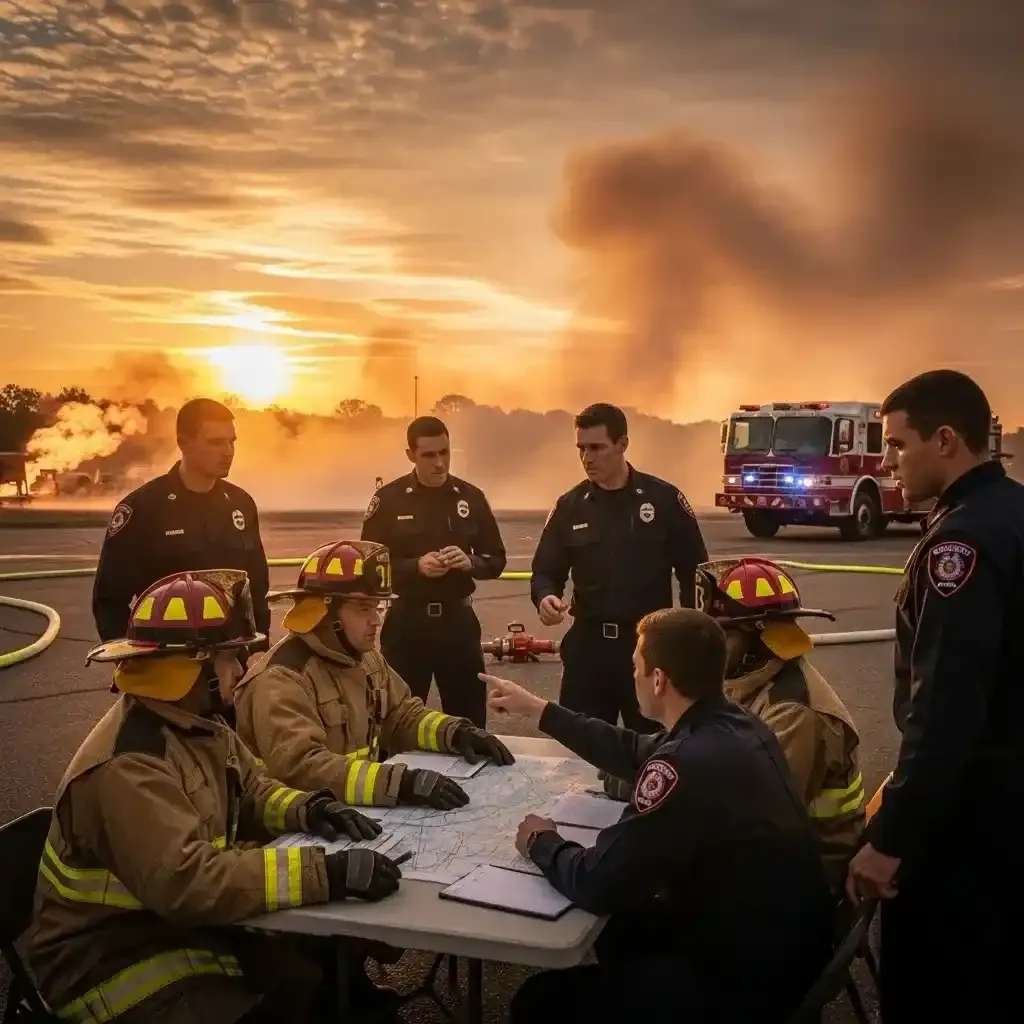
Industrial emergency response team preparing for a facility scenario
05

Emergency response planning

Turn credible scenarios and available barriers into actions people can follow under pressure.

Plans, roles, communications and drills grounded in the facility’s actual hazards and operating context.

  • MHI emergency plans
  • Plan reviews, scenarios and exercises
Explore emergency planning
06

Process-safety training

Build practical capability around the risk decisions engineers, supervisors and operating teams make on site.

Worked industrial examples connect methods to the documents, workshops and decisions participants encounter at work.

  • Operational and engineering teams
  • Leadership and regulatory-awareness groups
Explore process-safety training
Engineer facilitating process-safety training for a technical team

Experience across high-risk industrial environments.

Different facilities create different pathways to harm. Each industry view connects typical hazards to the risk work that supports a defensible decision.

0106

Industrial operations environment used for process-safety decision making
01

Oil and gas

Loss of containment, ignition, escalation and simultaneous operations demand disciplined scenario definition.

Relevant work
HAZOP · QRA · consequence modelling
Useful focus
Link each safeguard to a testable operating or maintenance requirement.
Discuss an oil and gas facility
Chemical processing equipment with vapour dispersion analysis
02

Chemical processing

Reactive chemistry, toxic materials and utility dependencies require a connected view of process and consequence.

Relevant work
MHI assessment · HAZOP · emergency planning
Useful focus
Review normal operation, start-up, shutdown and loss-of-utility scenarios together.
Discuss a chemical facility
Petroleum storage tanks and transfer infrastructure
03

Petroleum storage

Bulk inventories, transfer operations and neighbouring receptors shape both prevention and emergency planning.

Relevant work
MHI screening · modelling · response planning
Useful focus
Test transfer, overfill, bund, drainage and escalation assumptions against the real layout.
Discuss a storage facility
Mining and metals processing facility in operation
04

Mining and metals

Processing plants combine hazardous chemicals, high-energy equipment and changing operating conditions.

Relevant work
HAZID · HAZOP · bow-tie analysis
Useful focus
Bring operators and maintainers into the review so safeguards reflect work as performed.
Discuss a mining operation
Engineers reviewing safety information in a manufacturing environment
05

Manufacturing and FMCG

Fast-moving production can obscure hazardous inventories, change controls and utility-related scenarios.

Relevant work
Screening · change reviews · team training
Useful focus
Screen expansions and material changes before layout or procurement decisions are fixed.
Discuss a manufacturing site
Industrial operations centre monitoring utility and infrastructure systems
06

Utilities and infrastructure

Water treatment, energy systems and networked assets need risk decisions that account for service continuity and public exposure.

Relevant work
HAZID · consequence analysis · emergency planning
Useful focus
Define safe states and response actions for loss of supply, control or critical utilities.
Discuss infrastructure risk
MMRisk director Motlatsi Mabaso
Motlatsi Mabaso · Director

Technical expertise backed by recognised professional credentials.

Motlatsi Mabaso is a Chartered Chemical Engineer and member of the Institution of Chemical Engineers, with 10 years’ experience in process safety, risk management, technical safety and process engineering.

Professional standing
Chartered Chemical Engineer · IChemE member
Specialist methods
HAZOP, HAZID, SIMOPS, fault-tree and event-tree analysis, risk summation and ALARP demonstration
Sector exposure
Oil and gas, mining and metals, consumer goods, manufacturing and chemicals
Project exposure
South African and international assignments across Africa, Europe, the Middle East and Canada
Meet MMRisk’s technical leadership
Comparison of technical evidence in MHI safety reports Published technical case study

Turning complex risk questions into defensible decisions.

A useful safety report does more than satisfy a document list. It shows how scenarios, assumptions, safeguards and conclusions connect.

Question
What separates a reviewable MHI safety report from one that leaves critical evidence unclear?
Approach
Compare scope definition, scenario traceability, risk criteria, action ownership and reporting quality.
Decision value
Clearer regulatory readiness, stronger challenge of assumptions and a more usable basis for risk-reduction decisions.
Read the technical case study

Process safety training

Build stronger process-safety capability inside your organisation.

MMRisk delivers practical, technically grounded training for engineers, managers, supervisors and operational teams working in high-risk environments.

  • Delivered by practising risk engineers
  • Customised for industrial teams
  • On-site or facilitated delivery
Facilitator leading a technical risk workshop with an engineering team
Practical training connected to real operational risk.

Choose a programme

What capability does your organisation need to build?

02

Regulatory capability

MHI and regulatory awareness

Help management and operational teams understand MHI requirements and their organisational responsibilities.

Best suited for
Managers, supervisors and operational leaders
Delivery
Facilitated team workshop

Participants will learn

  • How MHI requirements apply to their facility
  • Key organisational responsibilities
  • How to prepare for compliance activities
View MHI course
03

Operational readiness

Emergency preparedness and response

Build credible scenarios, review barriers and turn them into practical response actions for site teams.

Best suited for
Emergency coordinators and site teams
Delivery
Scenario-based workshop

Participants will learn

  • Identify credible emergency scenarios
  • Map prevention and mitigation barriers
  • Draft actions teams can follow
View emergency response course

Practical guidance for safer, compliant facilities.

Explore technical guidance on MHI legislation, HAZOP studies, emergency planning and risk assessment—written for teams making real facility decisions.

Browse all insights

Loading the latest insights…

Focus the reading list on the questions your facility is working through.

Before you engage

Questions facilities ask before scoping the work.

These answers provide a practical starting point. The requirements and assessment scope for your facility will depend on your substances, processes, quantities and planned changes.

Not sure where to begin? An MMRisk engineer can help identify the appropriate next step.

Browse practical starting points, then involve an engineer when the decision depends on your site.

01 / MHI fundamentals

Understand the starting point

An MHI is an installation where the nature and quantity of hazardous substances, together with credible incident consequences, bring the facility within South Africa’s Major Hazard Installation regulatory framework.

The determination depends on the real facility and cannot be made from a generic checklist alone.

Explore the assessment process

Start with a structured screening of hazardous substances, maximum inventories, processes, site layout and potential consequences beyond the installation.

An engineer can then advise whether further assessment by an Approved Inspection Authority is required.

Request an MHI screening discussion

02 / Assessments and compliance

Prepare useful evidence

An assessment may be required for a qualifying existing installation, a new facility, an expansion or a material change that alters hazardous inventories, processes, layout or the risk basis.

Periodic review requirements also apply. Confirm the trigger against the current regulations and your facility circumstances.

Explore MHI risk assessment support

A useful first package includes the facility location, substance inventory and maximum quantities, process description, site and equipment layouts, existing studies and details of the proposed project or change.

MMRisk will identify gaps during scoping.

Use the MHI preparation checklist

The programme depends on facility complexity, information readiness, modelling scope, stakeholder input and review cycles.

MMRisk confirms milestones after reviewing the available information rather than promising a standard duration that may not fit the work.

Discuss your assessment pathway

03 / Facility changes and expansion

Test changes before they become costly

Yes. Early screening, HAZID or HAZOP facilitation, consequence modelling and risk assessment can help test site, layout and design decisions before they become expensive to change.

Scope the decision against the planned change, information available and potential consequences.

Discuss a planned facility change

04 / HAZOP and risk studies

Choose the right study

Yes. MMRisk facilitates structured HAZOP and hazard-identification workshops for new designs, modifications and existing operations.

The work can include preparation, guide-word review, action recording and technical reporting matched to the agreed scope.

Explore HAZOP facilitation

05 / Training

Build practical capability

Yes. Content can be shaped around participant roles, the methods they need to use and relevant facility scenarios.

The agreed programme will state the delivery format, learning outcomes and any prerequisites.

View process-safety training

06 / Working with MMRisk

Plan the conversation

MMRisk supports industrial clients across South Africa from its Pretoria base, with international project exposure where the engagement requires it.

Contact the team with your facility location so travel and site requirements can be scoped.

Discuss your facility with an engineer

Discuss your facility with a process-safety specialist.

MMRisk can help determine the appropriate assessment, workshop, modelling study or training programme.

Request a consultation Call +27 12 433 6506

info@mmrisk.co.zaMon–Fri · 07:00–17:00Based in Pretoria · serving South Africa